KidLabs
Interactive coding education platform for children featuring a built-in Python IDE, block-based programming with real-time Python equivalents, four user roles (Admin, Teacher, Student, Parent), live coding lessons, homework system, a badge & certificate reward system, and full mobile/tablet/desktop responsiveness
Country
TR
Time Frame
2026 - present
Industry
Education Technology
Project Type
Web Platform
Services
Coding Education, Block Programming, Python IDE, Live Lessons, Homework Management, Badge & Certificate System, Parent Monitoring, Responsive Design
Technologies
Next.js, React, Supabase, Jitsi, MongoDB, HTML, CSS
About the Project
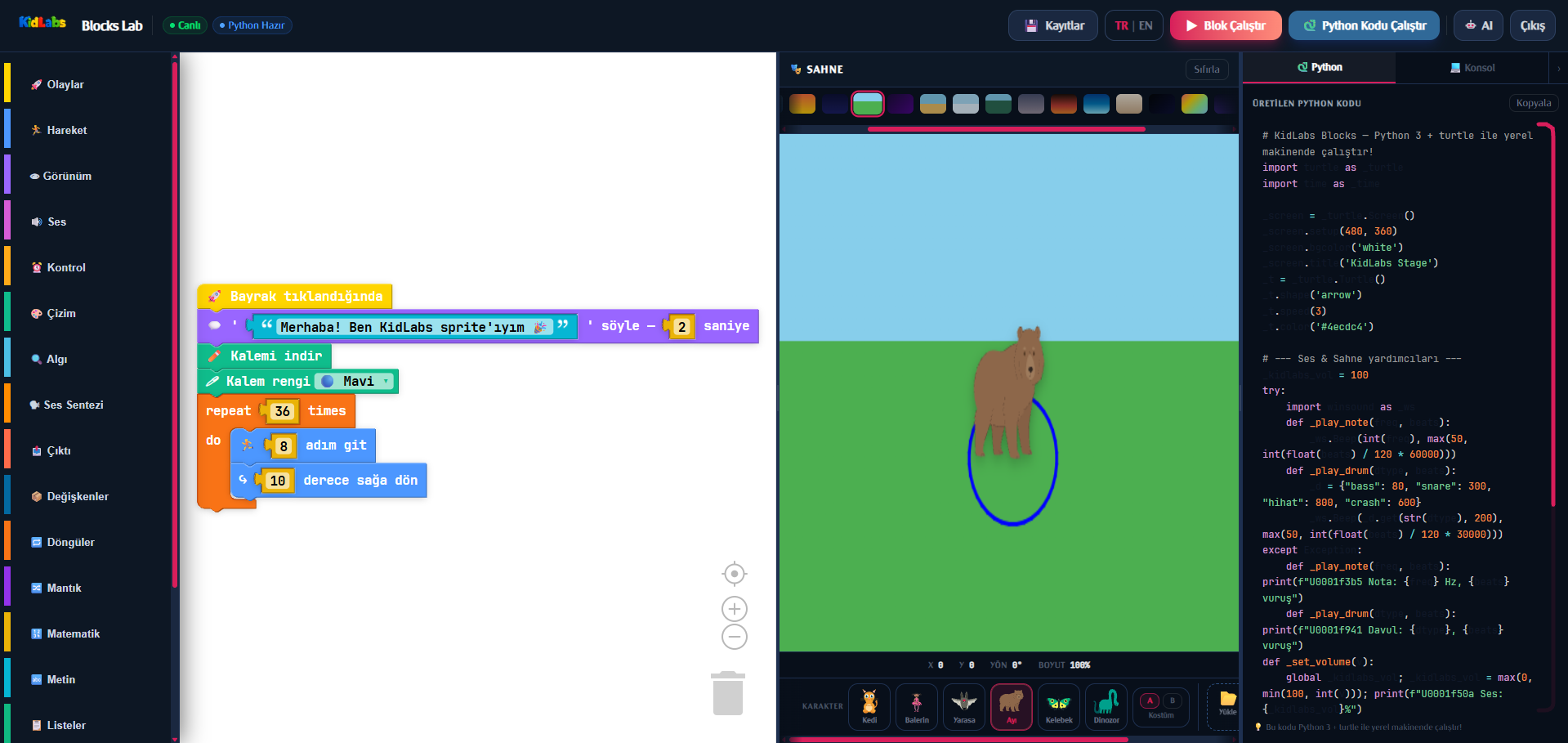
KidLabs is a creative coding education platform designed for children that transforms programming into an engaging, hands-on experience. Inspired by Scratch but far more versatile, KidLabs lets kids build projects with characters, scenes, music, motion, and drawing — all through an intuitive block-based editor that simultaneously shows the real Python equivalent of every block, bridging visual programming with real code.
Key Features
- Block-based visual programming editor with live side-by-side Python code preview
- Built-in Python IDE and compiler — students can write, run, and test real Python code directly in the browser
- Four distinct roles: Admin, Teacher, Student, and Parent — each with a tailored dashboard and permission set
- Parent mode: parents can log in to monitor their child's progress, completed lessons, earned badges, submitted homework, and overall performance at a glance
- Multi-scene projects: animate characters, compose music, draw, and combine all creative mediums in one project
- Age-based level progression system — lessons and complexity scale with the child's development stage
- Teachers can create, plan, and schedule lessons; assign homework to students
- Students can complete and submit homework directly within the platform
- Live one-on-one lessons with instructors via Jitsi — including screen sharing and real-time collaborative coding
- Badge system: students automatically earn badges by completing tasks, lessons, and challenges
- Teachers can manually award badges and issue certificates to students to recognise achievements
- Multi-user simultaneous coding sessions for collaborative learning experiences
- Dedicated progress tracking dashboard for teachers and parents to monitor student advancement in real time
- Fully responsive design — every feature, including the block editor, Python IDE, live lessons, and dashboards, works seamlessly on mobile, tablet, and desktop
Technical Architecture
The platform is built with Next.js for fast, SEO-friendly server-side rendering. Supabase provides the backend-as-a-service layer — handling authentication, real-time database sync, and storage. A dedicated REST API layer manages lesson content, user progress, homework submissions, and session scheduling.
Ready to start your project?