FlowIQ
AI-powered visual workflow automation platform — build, run, and manage intelligent automations with a drag-and-drop node editor, AI-generated flows, and IFTTT-style applets
Country
TR
Time Frame
2026 - present
Industry
Automation & AI SaaS
Project Type
SaaS Platform
Services
Visual Workflow Builder, AI Workflow Generation, Applet Automation, Node Execution Engine, Credential Management, Execution Monitoring
Technologies
Next.js, React, TypeScript, HTML, CSS
About the Project
FlowIQ is an AI-powered visual workflow automation platform that lets individuals and teams design, execute, and monitor complex multi-step automations without writing code. Inspired by tools like n8n and Zapier — but built with an AI-first approach — FlowIQ combines a powerful drag-and-drop node editor with an integrated AI assistant that can generate, explain, and refine entire workflows from a single natural language prompt.
Workflow Builder
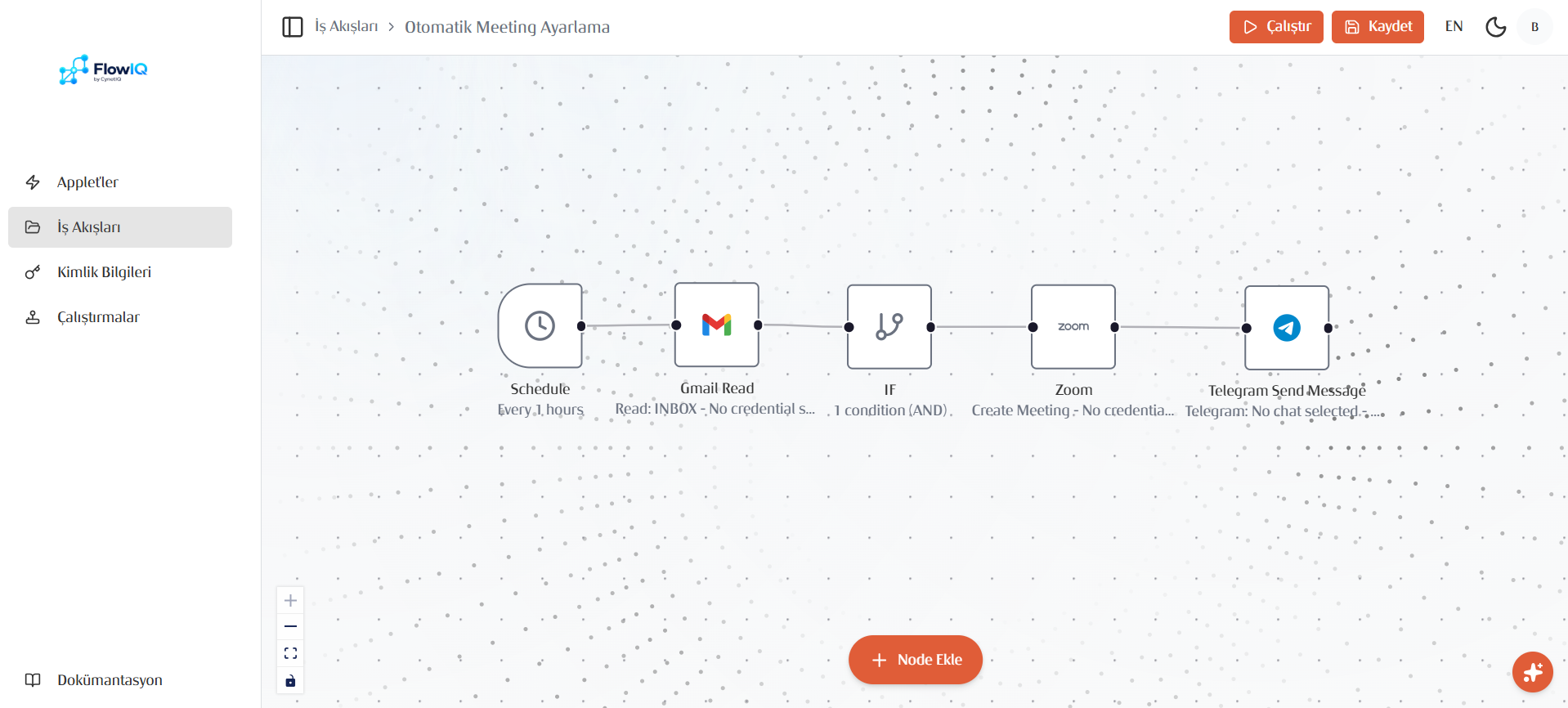
- Visual drag-and-drop node canvas with connectable trigger, action, and condition nodes
- Rich node library: Schedule, Gmail, Slack, Telegram, Zoom, HTTP Request, Webhook, AI providers, and more
- IF / condition branching with AND/OR logic — route automation paths based on data values
- Real-time execution preview with live node status, output inspection, and error highlighting
- Zoom, pan, fit-to-screen canvas controls and a minimap for large workflow navigation
AI Workflow Generation
- Describe any automation in plain language — the AI generates a fully connected, ready-to-run workflow instantly
- AI can modify, extend, or debug existing flows on demand
- Context-aware node suggestions as you build — the AI recommends the next best action based on your current flow
Applets (IFTTT / Zapier-style)
- One-click Applets — simple trigger-action templates for common automations (e.g. "New Gmail → Send Telegram", "Schedule → Post to Slack")
- Applet gallery with pre-built templates across categories: Communication, Productivity, Marketing, Finance, and AI
- Users can publish their own Applets to share with the community
Credentials & Integrations
- Centralised credential vault — connect OAuth2 and API-key services once and reuse across all workflows
- Supported integrations: Gmail, Google Calendar, Slack, Telegram, Zoom, GitHub, Notion, Airtable, OpenAI, HTTP/Webhook, and more
Executions & Monitoring
- Full execution history with per-run logs, node-level output, duration, and status (success / failed / running)
- Scheduled, webhook-triggered, and manual run modes
- Error notifications and configurable retry policies
Mobile & Responsive Design
FlowIQ is fully responsive and optimised for every screen size. The workflow canvas, node configuration panels, execution history, and Applet gallery all adapt seamlessly to mobile and tablet viewports — so users can monitor running workflows, review execution logs, and manage their automations from any device without compromising functionality.
Ready to start your project?